 IT & Networking
 Table of Contents
When businesses look for places to cut IT costs, structured cabling rarely comes up as a priority. It is invisible infrastructure - it lives in the walls, behind patch panels, and inside conduit runs that most employees never think about. That invisibility is exactly why so many businesses end up with a cabling plant that was never designed, just accumulated. One cable run added during a move, another run when someone needed a connection in a back office, a switch zip-tied to a shelf in a storage closet because nobody wanted to wait for a proper installation. The costs of that approach do not show up on an invoice. They show up as downtime, slow troubleshooting, and expensive retrofits when the business grows. Understanding the structured cabling benefits that come from a planned, professional installation is the clearest way to see why it is one of the most financially sound IT decisions a business can make.
The Real Cost of Unplanned Wiring
The most direct financial cost of bad cabling is downtime. When a network connection fails in an unplanned cabling environment, the diagnostic process starts from scratch every time. An IT technician - whether an internal hire or a managed service provider billing by the hour - has to trace unlabeled cables, test each run individually, and work around a patch panel that may have been punched down by three different people over as many years. What should be a 15-minute fix becomes a 90-minute investigation.
For a business with 20 employees who bill at even a modest rate, an hour and a half of network downtime during business hours carries a real dollar cost. Multiply that by how often it happens - a few times a year in a typical unmanaged cabling environment - and the cumulative figure climbs quickly. Businesses in Bucks County and Montgomery County that have gone through this cycle more than once often describe it the same way: a slow drain that nobody tracks because no single incident is large enough to force a conversation.
Beyond labor costs, poorly installed cabling causes subtle performance problems that are hard to attribute to their actual source. Cables run too close to fluorescent lighting, HVAC conduit, or electrical lines pick up interference that degrades signal quality. Exceeding the maximum bend radius for Cat6 cable during installation creates permanent performance loss in that run. These issues rarely cause an outright failure. Instead, they produce intermittent slowness, packet loss during video calls, and file transfers that take longer than they should. The business absorbs those costs as reduced productivity without ever connecting them to the wiring in the walls.
What Structured Cabling Actually Means
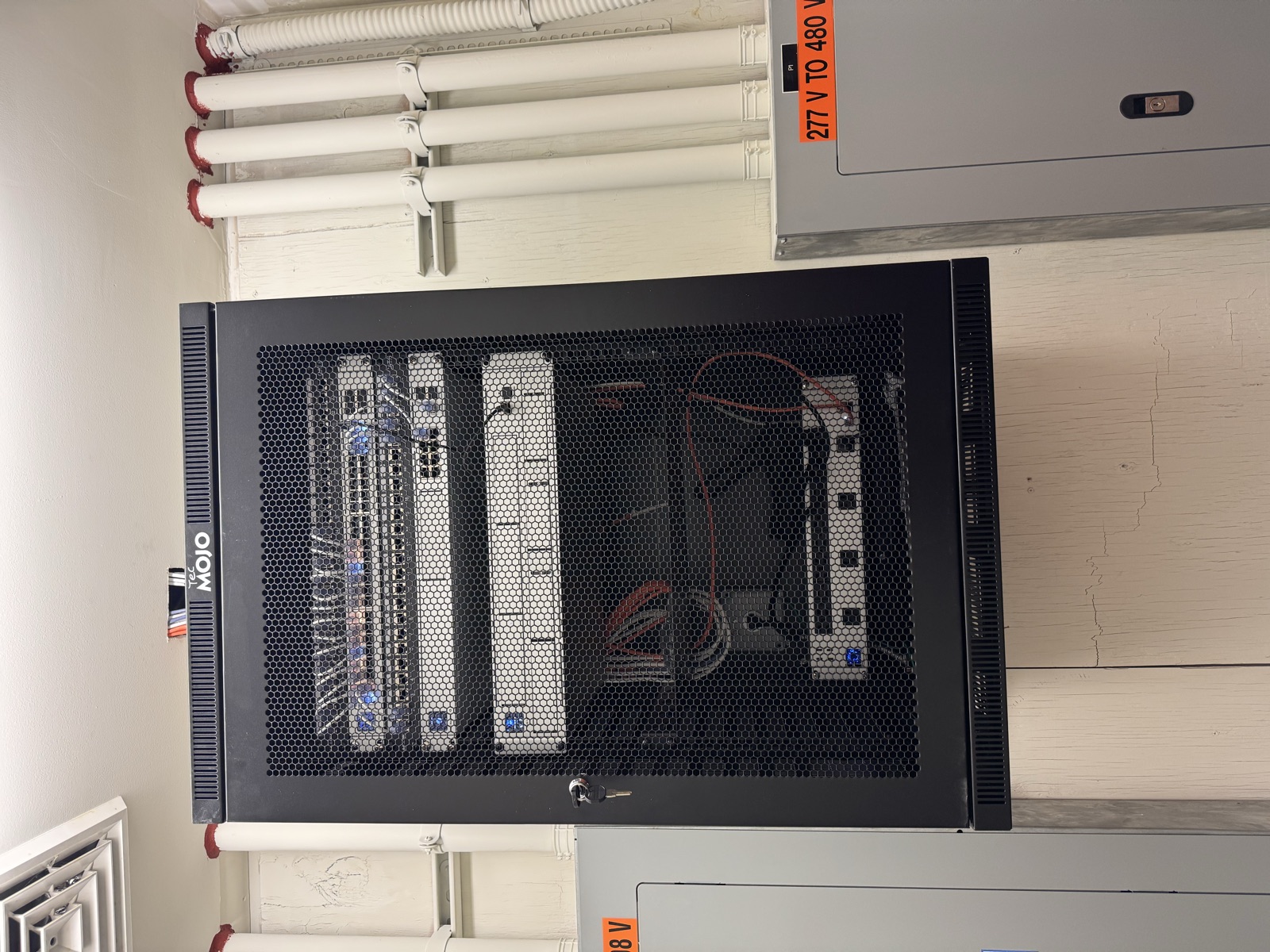
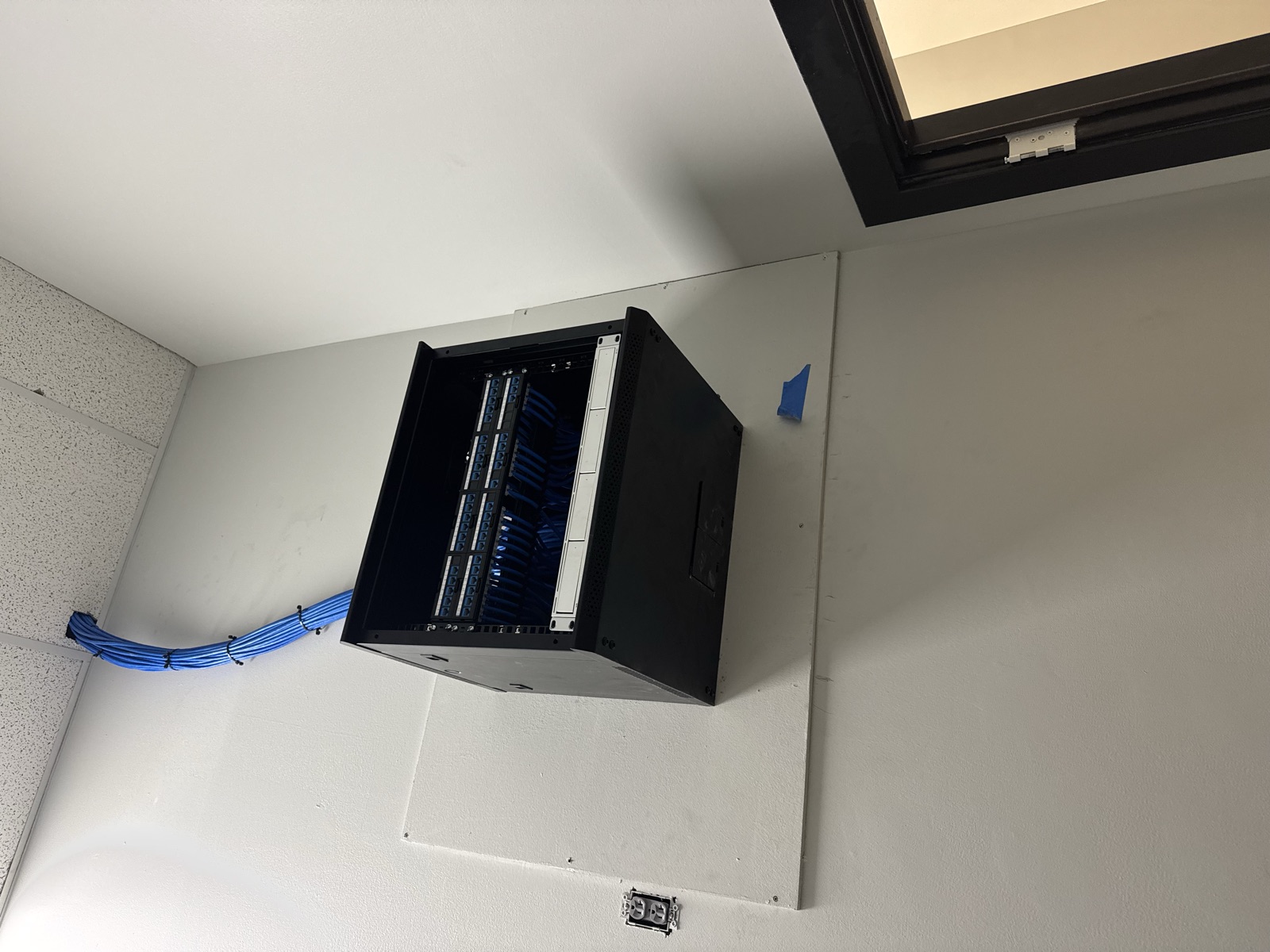
Structured cabling is a standardized approach to installing and organizing a building’s communication infrastructure. Rather than running cables point-to-point whenever a need arises, a structured system routes every cable from each workstation, access point, or device back to a central distribution point - typically a patch panel in a wiring closet or server room.
The standard that governs most commercial installations is ANSI/TIA-568, which defines cable categories, maximum run lengths, connector types, and testing requirements. A structured cabling installation certified to this standard has documentation of every cable run, test results that confirm each run meets performance specs, and a labeling system that makes it possible to identify any port in the building from the patch panel.
From a structured cabling benefits standpoint, the documentation alone is worth a significant portion of the installation cost. When a connection fails, the technician checks the label, locates the cable in the panel, and plugs in a test device. The diagnostic that used to take 90 minutes now takes 10. When a new employee needs a workstation, the unused port in their area is connected to a labeled, tested run that patches into the switch in two minutes.
Professional installers use a cable certifier - not just a continuity tester - to verify that every run meets the Cat6 specification it was installed to. That certification is documentation of a known-good baseline. If a run starts failing in two years, the test data tells you whether it was an installation problem that went undetected or something that happened after the fact.
Scalability: How Structured Cabling Pays for Itself as You Grow
One of the strongest structured cabling benefits for growing businesses is how it accommodates change without requiring a new investment every time the headcount increases.
An unplanned network grows by addition: someone needs a connection, so a new cable is run, a switch is added to a location that can support it, and the documentation - if any exists - falls further behind. Every growth event adds complexity and cost. The wiring that supports 15 employees becomes increasingly fragile as it stretches to support 25, then 35.
A structured cabling system is designed with growth in mind from the first day. A properly spec’d installation for a 15-person office includes a patch panel with ports for 30 or 40 connections. The cable runs are already in the walls to every workstation location, including offices that are currently empty. Adding a new employee means connecting the patch panel port to an open switch port - a job measured in minutes, not hours.
The cost comparison over a five-year period is significant. Businesses in the Doylestown and Lansdale areas that have tracked this consistently find that a structured installation costs less over five years than an ad hoc network that grows one emergency cable run at a time. The structured installation front-loads the cost. The unplanned approach spreads it out in smaller amounts that feel manageable but add up to more.
This scalability also applies to technology upgrades. When Cat6 becomes the standard and a business wants to support higher bandwidth applications, a structured cabling system can be tested and certified for the new use case. An unplanned network may have a mix of cable categories, unknown run lengths, and connections that cannot support an upgrade without a complete reinstallation.
Reduced Downtime and Faster Troubleshooting
Every hour of network downtime has a measurable cost. Whether the business handles invoicing, runs manufacturing software, or depends on cloud applications for daily operations, a network outage stops work. The cost is the lost billable time, the delayed transactions, and the staff hours spent waiting or working around the problem.
Structured cabling reduces downtime in two ways. First, the quality of the installation produces fewer failures. Cables are run in conduit or through proper pathways rather than stapled along baseboards or tossed through ceiling tiles. Connectors are terminated using professional tooling and tested before the job is closed. The mechanical integrity of the installation is higher from day one.
Second, when something does go wrong, the structured system makes it faster to find and fix. Every port is labeled. Every run has test documentation. The patch panel maps every physical location in the building to a specific port that can be tested in isolation. A cable that fails due to physical damage - a chair rolling over it, a ceiling tile falling on it - is identified in minutes rather than hours.
For businesses in Warminster, Horsham, and Hatfield that run time-sensitive operations, the ability to resolve a cabling issue quickly is not a luxury. It is a direct contribution to the business’s ability to meet commitments and serve customers without interruption.
Structured Cabling and Your IT Team’s Time
The hidden cost that rarely appears in any ROI calculation is the time your IT staff - internal or contracted - spends managing a chaotic cabling environment versus a structured one.
Every hour an IT technician spends tracing unlabeled cables, documenting a connection that should already be documented, or working around a switch that was never properly integrated is an hour not spent on work that moves the business forward. Managed service providers billing for on-site time are a direct cost center. Internal IT staff represent an opportunity cost: every hour spent on cabling archaeology is an hour not spent on security monitoring, system updates, or user support.
Structured cabling reduces that ongoing overhead significantly. The labeling and documentation that come with a professional installation are the foundation of an IT environment that any competent technician can work in without a lengthy orientation. When a new MSP takes over a structured network, they can be productive from the first visit. When the same provider takes over a tangled, undocumented network, they spend the first several visits just building a picture of what exists.
For businesses throughout Bucks County and Montgomery County - whether in Chalfont, Newtown, Lansdale, or Warminster - the quality of the cabling infrastructure determines how efficiently IT support time is used. That efficiency is a recurring financial benefit that continues for the life of the installation.
FAQ
Q: What is the typical cost of a structured cabling installation for a small business? A: For a small business with 15 to 30 workstation locations, a professional structured cabling installation including patch panel, cable runs, and certification testing typically ranges from $4,000 to $10,000 depending on building size, number of floors, and conduit requirements. This is a one-time investment that generally lasts 10 to 15 years before technology changes require an upgrade, which puts the annualized cost well below what most businesses spend on IT support hours dealing with unplanned wiring problems.
Q: How long does a structured cabling installation take? A: A typical small business installation takes one to three days. The actual schedule depends on the number of runs, the building construction, and whether conduit needs to be installed. Most businesses can schedule the work to minimize disruption - evening or weekend installation is an option for environments where daytime downtime is not acceptable.
Q: Can existing cabling be certified and brought up to structured cabling standards? A: In some cases, yes. A professional installer can test existing runs to determine which meet current performance standards and which need to be replaced. Buildings with relatively recent Cat6 cabling that was installed cleanly - proper routing, correct terminations, no excessive bends - often have a significant portion of their existing infrastructure worth keeping. An audit and certification visit is the starting point for understanding what you have.
Q: Does structured cabling make a difference if we are primarily a wireless office? A: Yes. Wireless access points require wired connections to the network, and the performance of every device on a wireless network depends on the quality and capacity of the wired backbone behind the access points. A well-designed wireless network runs over a structured cabling infrastructure. The two systems are complementary, not alternatives.
Ready to stop paying for IT problems rooted in unplanned wiring? Call Graff’s Electric & IT Solutions at (215) 974-0720 or visit graffselectric.com to schedule a structured cabling assessment. We design and install certified cabling systems for businesses throughout Bucks County and Montgomery County, including Warminster, Doylestown, Lansdale, Horsham, Hatfield, Chalfont, Newtown, and the surrounding area.
Sponsored
Need a Licensed Electrician?
Serving Bucks & Montgomery County. Free estimates on all projects.
Get Your Free EstimateNeed Help With This?
Graff's Electric & IT Solutions is here to help with all your electrical and technology needs in Bucks & Montgomery County.