 Electrical
 Table of Contents
If you’ve ever plugged in a space heater and watched the lights dim - or heard your breaker trip in the middle of making dinner - you’ve experienced a circuit overload. It’s one of the most common electrical problems in homes, especially older ones, and it’s more than just an inconvenience. Overloaded circuits are a leading cause of electrical fires.
What Is a Circuit Overload?
Every circuit in your home is designed to carry a specific amount of electrical current, measured in amps. Most residential circuits are either 15-amp or 20-amp. When you plug in devices that draw more current than the circuit can safely handle, the circuit becomes overloaded.
When that happens, the breaker trips - that’s its job. The breaker is a safety device that cuts power before the wires overheat. Without it, the wires could get hot enough to ignite surrounding materials.
What Causes Overloaded Circuits?
The most common causes include:
- Too many devices on one circuit - Plugging a space heater, microwave, and hair dryer into outlets on the same circuit will almost always trip the breaker.
- Power strips and extension cords - Daisy-chaining power strips doesn’t create more capacity. The circuit is still limited to 15 or 20 amps regardless of how many outlets you add.
- Old wiring with modern demands - Homes built 30+ years ago were wired for a fraction of the electrical load we use today. Kitchens might have one or two circuits where current code requires at least four.
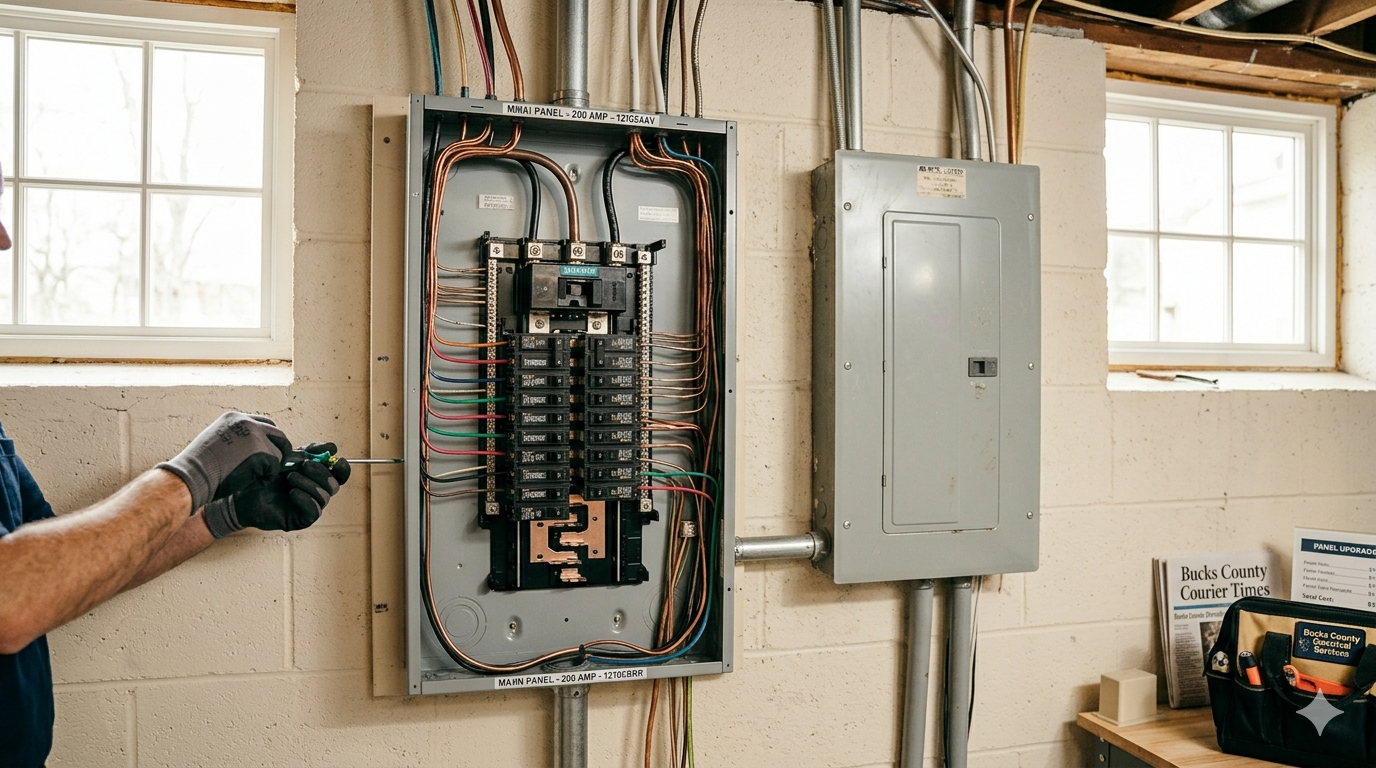
- Undersized panel - A 100-amp panel trying to serve a home with central AC, an electric dryer, an EV charger, and a home office is going to struggle.
Warning Signs of an Overloaded Circuit
Watch for these red flags:
- Breakers trip repeatedly (especially the same one)
- Lights flicker or dim when you turn on an appliance
- Outlets or switch plates feel warm
- A burning or plastic smell near outlets
- Buzzing sounds from the panel or outlets
- Discolored or melted outlet covers
If you notice any of these, don’t ignore them. A tripping breaker is doing its job - but it’s telling you something needs to change.
How to Prevent Circuit Overloads
1. Spread the Load
Don’t plug all your high-draw devices into the same circuit. Move the space heater to a different room’s outlet or unplug something else first. Know which outlets share a circuit - if you’re not sure, an electrician can map it out for you.
2. Stop Using Power Strip Chains
A power strip is a convenience device, not a capacity upgrade. If you need more outlets in a room, you probably need an electrician to add a dedicated circuit.
3. Add Dedicated Circuits
High-draw appliances should have their own dedicated circuit. This includes:
- Refrigerators
- Microwaves
- Window AC units
- Space heaters
- Bathroom outlets (GFCI required)
- Home office equipment
4. Upgrade Your Panel
If your home is running on a 100-amp panel and you keep tripping breakers, a 200-amp upgrade gives you the capacity to handle modern electrical demands without constantly overloading circuits.
5. Have Your Home’s Wiring Evaluated
An electrician can assess your current wiring, identify overloaded circuits, and recommend targeted fixes. Sometimes adding two or three circuits solves the problem without a full rewire.
The Bottom Line
Overloaded circuits aren’t something to live with. They’re a safety issue. If breakers are tripping regularly, or you’re using extension cords and power strips as permanent solutions, it’s time to address the root cause.
We serve homeowners across Bucks County and Montgomery County. Call (215) 974-0720 to schedule an evaluation - we’ll identify the problem and give you a clear path to fix it.
Sponsored
Need a Licensed Electrician?
Serving Bucks & Montgomery County. Free estimates on all projects.
Get Your Free EstimateNeed Help With This?
Graff's Electric & IT Solutions is here to help with all your electrical and technology needs in Bucks & Montgomery County.